Add a sewer backup endorsement to your insurance
Standard homeowners excludes sewer backup. The endorsement costs $50–$150/year and covers $5,000–$25,000 typically. Every US homeowner should carry it.
Sewage backup is the most dangerous water damage scenario. Here's why DIY isn't safe — and what to do.
The first day determines whether this is a $5,000 problem or a $50,000 reconstruction. Follow these steps in order.
Sewage water is Category 3 (black water) — full of pathogens including E. coli, Hepatitis A, Salmonella, and norovirus. Get pets, children, and immunocompromised family members out of the affected area immediately.
If you absolutely must enter, wear rubber boots, waterproof gloves, an N95 minimum (P100 better), and disposable clothing. No bare skin contact.
If the backup came from a single fixture (overflowing toilet), close its supply valve. If it's a main line backup, you may need to shut off the main and call the city — backups during heavy rain are often city sewer overload.
Sewage water reaching outlets, switches, or appliances creates electrocution risk. Flip the breakers from a dry location.
Sewer backup coverage requires a specific endorsement on most US homeowners policies. Even if you don't have it, document and file — coverage interpretations vary, and some events qualify under other provisions.
This is not a DIY scenario. Cat 3 cleanup requires hospital-grade disinfectants, full PPE, dedicated equipment never cross-used on clean-water jobs, and biohazard waste disposal.
From a safe distance, photograph the extent of contamination, affected materials, and source. Insurance documentation cannot be reconstructed later.
Tree roots, collapsed pipe, or municipal sewer overload during heavy rain push waste back up through the lowest drains in your home — usually basement floor drains, lower-level toilets, or laundry tubs.
Clogged toilet plus continued flushing produces overflow. Sometimes contained, sometimes catastrophic if a wax ring failure happens at the same time.
Full tank, failed leach field, or pump failure backs sewage up through the lowest drains. More common in rural areas and homes that haven't been pumped in 5+ years.
Older US cities (Chicago, Boston, Pittsburgh, Indianapolis) have combined storm and sanitary sewers. Heavy rain overwhelms capacity, pushing combined waste back into homes.
When the sump fails and groundwater rises, the lowest point in the home (often floor drains) sees the backup. If the sewer is also overloaded, you get sewage on top of groundwater.
DIY plumbing without proper P-trap or venting can result in slow sewage migration over time — eventually showing as backup or persistent odor.
These mistakes turn manageable losses into reconstruction projects. We see them every week.
Health risks alone make this a no. But also: amateur cleanup almost always misses contamination wicked into walls, behind cabinets, and under flooring — leaving an active pathogen reservoir.
Bleach reacts dangerously with ammonia in urine. It's also water-based (which feeds bacteria) and consumer concentrations don't kill all sewage pathogens. Use EPA-registered hospital-grade disinfectants only.
IICRC S500 explicitly requires removal of carpet, pad, drywall, and insulation that contacted Category 3 water. Drying contaminated material just creates a dried-out biohazard.
Aerosolized pathogens and spores spread through ducts. Don't restart HVAC until ducts have been inspected and decontaminated by a Cat 3-certified pro.
Sewage water wicks 4–18 inches up through drywall and into adjacent rooms via subfloor and wall cavities. The visible area is usually the smallest portion of contamination.
Any restoration company that proposes drying Cat 3 in place without removing porous materials is violating IICRC S500. Get a second opinion or call us.
Always — for every sewage backup, regardless of size. There is no DIY scenario for Cat 3 water. The health risk to your family, the documentation requirements for insurance, the disposal of biohazard waste, and the verification testing all require professional expertise. Restoration crews dispatched within 60–90 minutes for sewage events. The cost of professional cleanup is recoverable through insurance (if you have a sewer backup endorsement); the cost of DIY-gone-wrong includes long-term health effects and tens of thousands in remediation when bacteria spreads.
Most water damage events are preventable with simple maintenance. Here's the playbook.
Standard homeowners excludes sewer backup. The endorsement costs $50–$150/year and covers $5,000–$25,000 typically. Every US homeowner should carry it.
Mechanical valve that prevents municipal sewer water from backing up into your home. Cost: $1,200–$3,500 installed. Required code in many flood-prone municipalities.
Camera inspection every 5–7 years for older homes. Hydro-jetting clears roots and buildup. Catching a partial blockage prevents the full backup.
Skipped pumping is the #1 cause of septic backup. Cost: $300–$600 per pump. The math is overwhelming.
Flushable wipes don't disintegrate; they snag on roots and create blockages. Grease solidifies in cool sewer pipes. Both are leading causes of backups.
Power failures during storms are when sump pumps are most needed. Battery backup ($500–$1,500) keeps it running when the grid is down.
If your city has combined sewers (CSO communities), heavy rain backups are predictable. Insurance and prevention strategies should account for this.
| Item | Range |
|---|---|
| Cat 3 emergency response & PPE setup | $500 – $1,500 |
| Sewage extraction (per affected area) | $1,500 – $5,000 |
| Demolition & biohazard disposal | $2,000 – $8,000 |
| Disinfection & antimicrobial treatment | $1,200 – $4,500 |
| Structural drying | $2,500 – $7,000 |
| Reconstruction (drywall, flooring, cabinets) | $5,000 – $20,000 |
| HVAC duct cleaning (if affected) | $1,500 – $5,000 |
Total sewage backup restoration costs in the US average $7,000–$25,000, with major events reaching $40,000+. Coverage caps with sewer backup endorsement are typically $5,000–$25,000 — be prepared to negotiate or supplement with public adjuster help when costs exceed sublimits.
See full pricing breakdown across all servicesStandard US homeowners insurance does NOT cover sewer backup unless you have a specific water/sewer backup endorsement. Without the endorsement, you have very limited recovery options — possibly municipal liability if the city sewer was at fault, or NFIP flood insurance if combined with rising-water flood. With the endorsement, coverage is typically capped at $5,000–$25,000. Document everything immediately, work with your contractor on supplements as more contamination is discovered, and if costs exceed coverage, consider a public adjuster (works on contingency, typically 10–20% of recovery). Cause documentation matters enormously: city sewer overload differs from septic failure differs from in-home blockage — each may invoke different coverage.
How we handle your insurance claimCrews arrive in PPE, set up containment, source identification
Submersible pumps, biohazard bagging
All porous materials cut out, double-bagged, disposed per state regs
Detergent pre-cleaning, EPA-registered disinfectant application, ATP testing
Standard structural drying with daily monitoring
Drywall, flooring, cabinets, paint
We document everything, bill insurance directly, and never charge for the inspection — even if you choose not to proceed.
Drag each slider to see what a completed restoration can look like. These are AI-generated illustrations, not photos of actual customer projects.
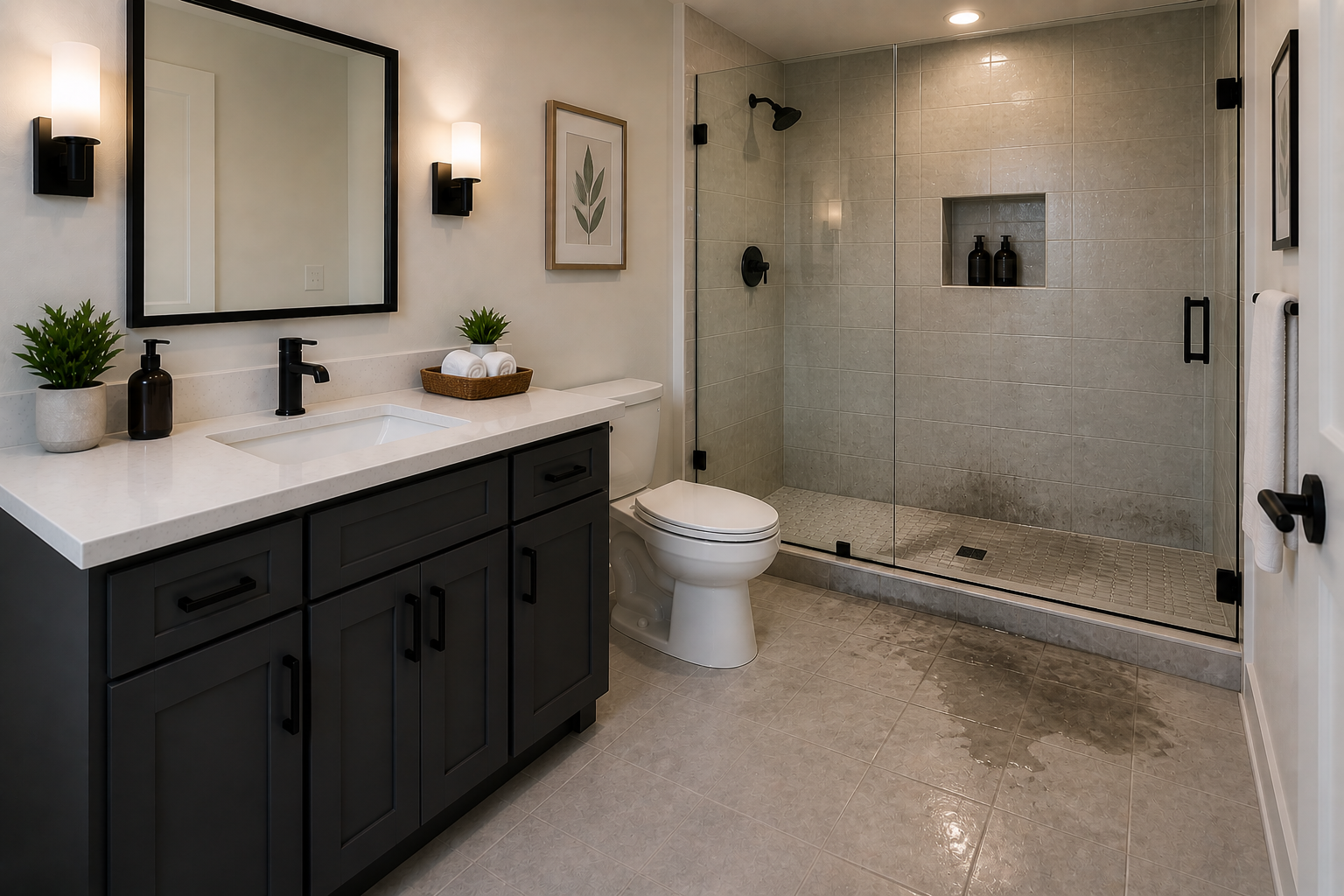
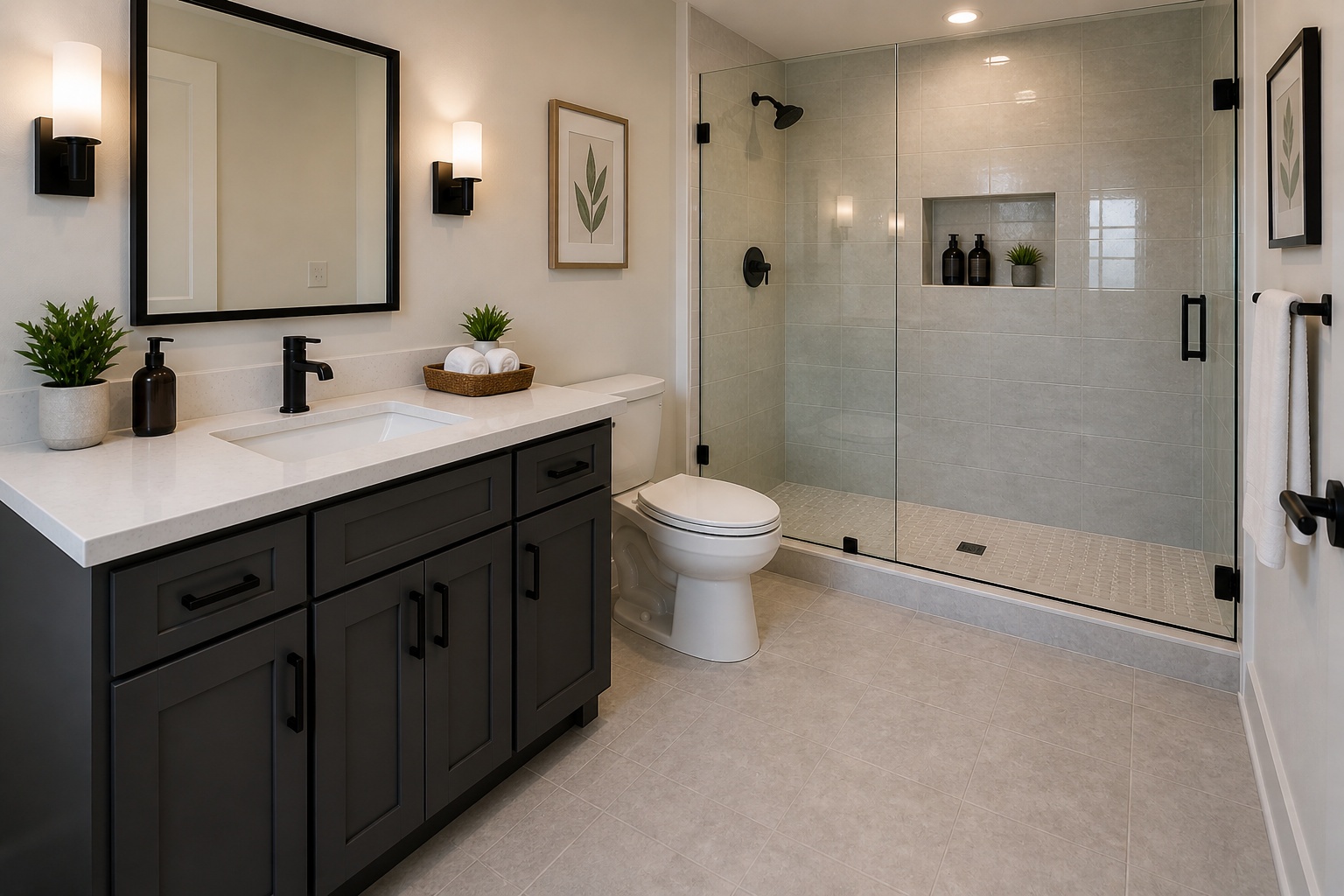
AI-generated – not an actual customer project. Shows what a result may look like.
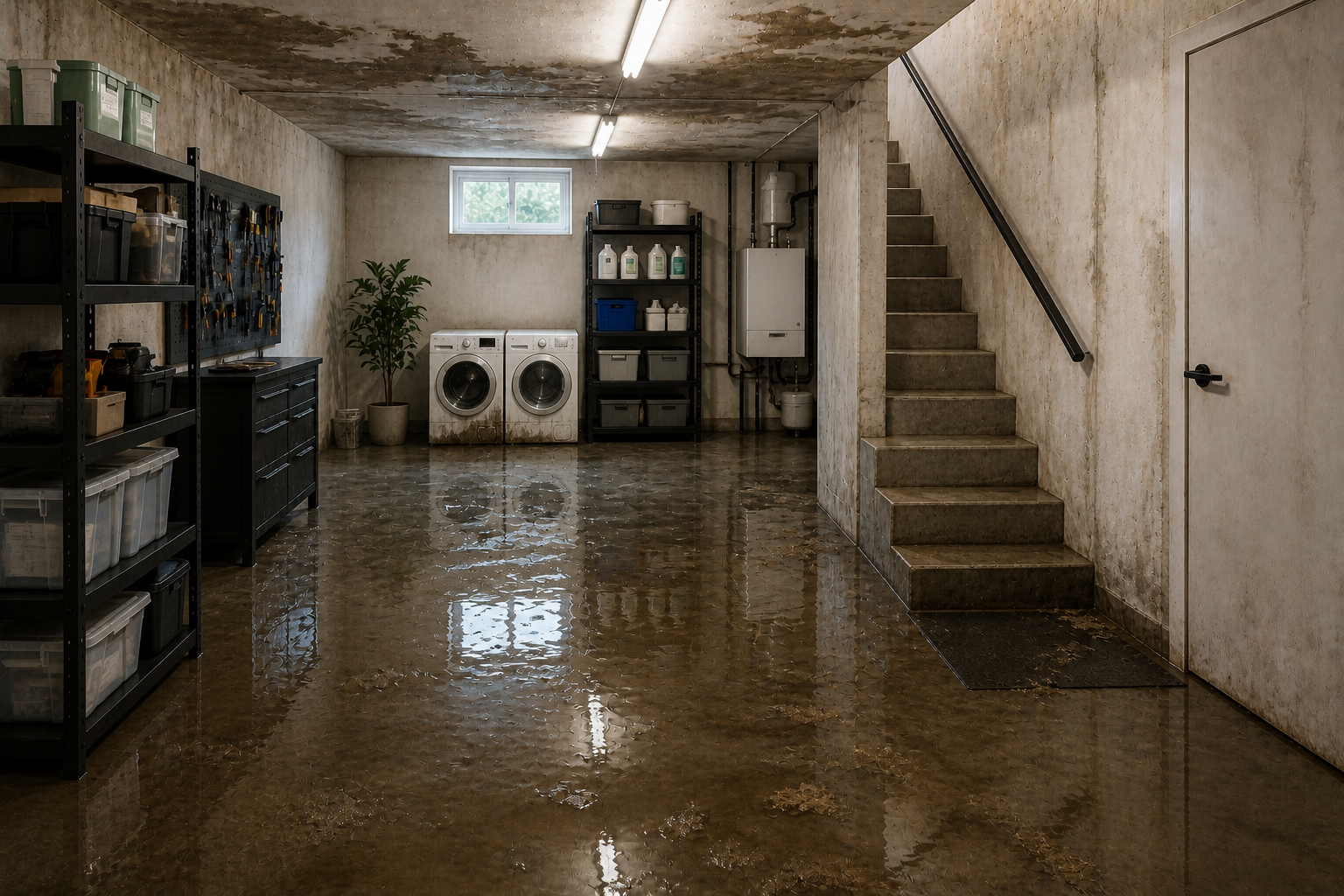
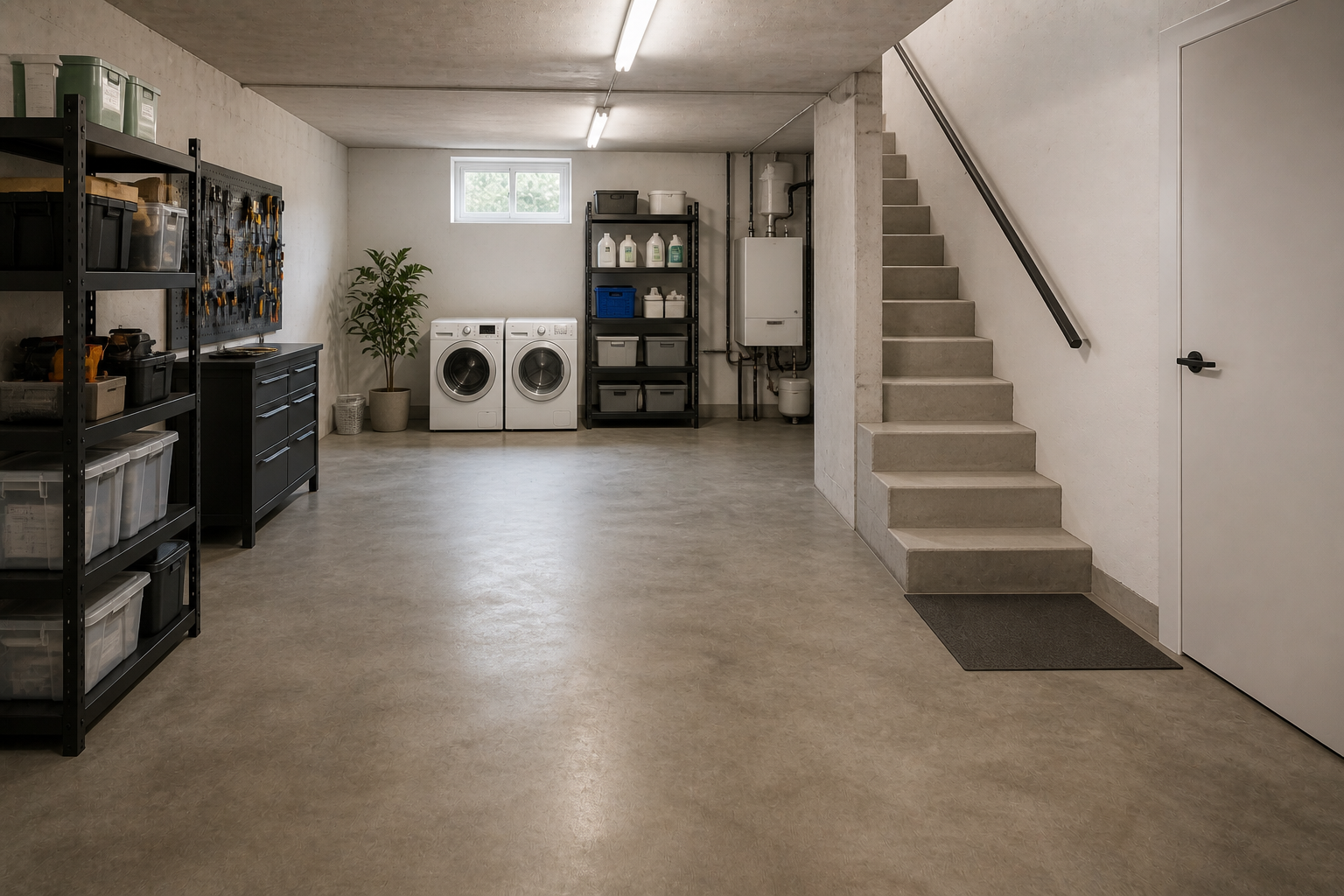
AI-generated – not an actual customer project. Shows what a result may look like.
Water damage doubles in cost every hour. Mold starts in 24. Call now — free inspection, fast response, insurance handled.