Insulate pipes in unheated spaces
Pipes in attics, crawl spaces, garages, and along exterior walls. Pipe insulation costs $0.50–$1.50/ft. A burst pipe costs $5,000–$30,000. The math is obvious.
A burst pipe can dump hundreds of gallons in minutes. Here's exactly what to do — and what NOT to do.
The first day determines whether this is a $5,000 problem or a $50,000 reconstruction. Follow these steps in order.
Locate the main water shutoff (usually basement, crawl space, or where the supply line enters the house) and close it. This stops the flow at the source. If you can't find or operate the main, call your water utility — they can shut you off at the meter.
If water has reached outlets, lighting, or appliances, flip the breakers for those circuits. Do not stand in standing water to operate the panel — use a dry stick or call an electrician.
Photos and 30-second video of every wet area, every damaged item, and the source of the leak. Insurance pays for what's documented — not what was 'definitely there.'
Most US homeowners policies require prompt notice (24–72 hours). Late notice is a leading cause of claim reductions. Open the claim, get a claim number, then move on.
Truck-mounted extraction within hours prevents secondary damage. Wood subfloor swells in 4 hours, drywall delaminates in 8–12, mold starts at 24–48. Speed determines whether your loss is $5,000 or $50,000.
Furniture, electronics, family photos, important documents. Lift furniture off wet carpet onto blocks or aluminum foil to prevent stains and rot.
Water-saturated drywall ceilings can collapse without warning. If your ceiling is bulging or dripping, stay out and let the pros handle it.
Water expands ~9% when frozen, splitting pipes (often inside walls). Failure usually shows when the ice thaws — typically a few days after the cold snap, not during. Common in unheated basements, crawl spaces, attics, exterior walls.
Galvanized steel, copper, and even some PEX systems corrode over decades. Pinhole leaks can become full ruptures without warning. Homes built before 1970 with original supply lines are highest risk.
Above 80 PSI is hard on supply lines, fittings, and appliances. A pressure regulator failure or a city pressure spike can blow the weakest link.
Especially in DIY plumbing or rushed renovation work. Joints under sinks, behind toilets, and in walls are common failure points.
Roots seeking moisture wrap and crack older clay or cast-iron sewer lines. Less common in pressurized supply lines but possible in old galvanized service lines.
Earthquakes, settling foundations, and even washing machines on uneven floors can fatigue connections over time.
These mistakes turn manageable losses into reconstruction projects. We see them every week.
Consumer vacuums move 1–3 GPM. A burst pipe puts out 5–15+ GPM. You'll never catch up, and the water already in the pad and subfloor isn't coming out with a shop vac.
Fans without dehumidifiers just move humid air around. The wet doesn't dry — it spreads.
Demolition before water is contained spreads the loss. Pros extract first, then make controlled cuts only where needed.
Surface dry doesn't mean structurally dry. Hidden moisture in wall cavities feeds mold for months.
Initial estimates routinely miss 20–40% of actual damage discovered during demolition. Always reserve the right to submit supplements.
Surface-dry isn't dry. Insist on moisture readings below the IICRC dry standard before signing off.
Halfway-through transitions create finger-pointing about who caused which damage. Pick a contractor and stick with them through completion.
If the burst released more than a few gallons (anything beyond a single small leak), or if water has reached more than one room, drywall, carpet, or hardwood — call a restoration professional. The decision point: if you can't extract every drop with a wet-vac in 20 minutes, the residual moisture will cause secondary damage. Restoration crews bring 100+ GPM truck-mounted extraction, LGR dehumidifiers, and the moisture meters to verify drying — none of which is rentable from a hardware store. Insurance also expects professional mitigation; DIY 'mitigation' that fails leads to claim reductions.
Most water damage events are preventable with simple maintenance. Here's the playbook.
Pipes in attics, crawl spaces, garages, and along exterior walls. Pipe insulation costs $0.50–$1.50/ft. A burst pipe costs $5,000–$30,000. The math is obvious.
Especially during winter trips. Vacant homes with no heat are the #1 source of January insurance calls.
Devices like Flo by Moen, Phyn, and StreamLabs detect anomalies and shut water automatically. Many insurers offer 5–10% discounts for installation. Cost: $500–$1,500 installed.
Braided steel angle stops and supply lines have a finite lifespan. Replacement is $5–$15 each — a fraction of the damage they cause when they fail.
If your house pressure is over 80 PSI, install or replace the regulator. Most regulators last 7–12 years before failing.
A pencil-thin stream prevents pressure buildup in pipes. Pinpoint the most exposed faucets (kitchen sink on exterior wall, garage utility sink, etc.).
Lets warm room air reach the pipes. Especially important on exterior walls and corner kitchens.
When the pipe bursts at 2am isn't the time to learn. Test the valve once a year so you know it works.
| Item | Range |
|---|---|
| Pipe repair (plumber) | $150 – $1,500 |
| Water extraction (1–2 rooms) | $1,200 – $3,500 |
| Structural drying (4–5 days) | $2,500 – $6,000 |
| Drywall removal & replacement (per room) | $1,500 – $4,500 |
| Carpet & pad replacement (per room) | $800 – $3,000 |
| Hardwood refinishing or replacement | $2,000 – $12,000 |
| Mold remediation (if delayed) | $2,000 – $10,000 |
| Reconstruction (cabinets, paint, trim) | $2,500 – $15,000 |
Total burst pipe restoration in the US averages $5,000–$25,000, with most insurance-covered claims resolving for the homeowner's deductible only. Catastrophic losses (multi-room, hardwood damage, mold complications) can exceed $50,000.
See full pricing breakdown across all servicesBurst pipe water damage is one of the most reliably covered losses under standard US homeowners insurance (HO-3 form). The cause must be sudden and accidental — gradual leaks (deemed maintenance) and frozen pipe failures where the home was vacant without heat may be excluded. Process: notify carrier within 24–72 hours, get claim number, mitigate damage immediately (shutoff + extraction), document with photos and moisture readings, meet adjuster on-site (with your contractor present), get scope approved, complete work, submit final invoice with supplements as needed. Most claims close in 30–60 days. Out-of-pocket: just your deductible (typically $500–$2,500). Pro tip: ask about ALE (Additional Living Expense) coverage if your home is uninhabitable — it pays for hotels, meals, and pet boarding.
How we handle your insurance claimPro arrives, source contained, extraction begins
All standing water removed, initial moisture mapping
Dehumidifiers and air movers run 24/7 with daily monitoring
Removal of unsalvageable materials (drywall, carpet pad, insulation)
Drywall, flooring, paint, cabinets, finish work
Moisture verification, photos, final insurance submittal
We document everything, bill insurance directly, and never charge for the inspection — even if you choose not to proceed.
Drag each slider to see what a completed restoration can look like. These are AI-generated illustrations, not photos of actual customer projects.
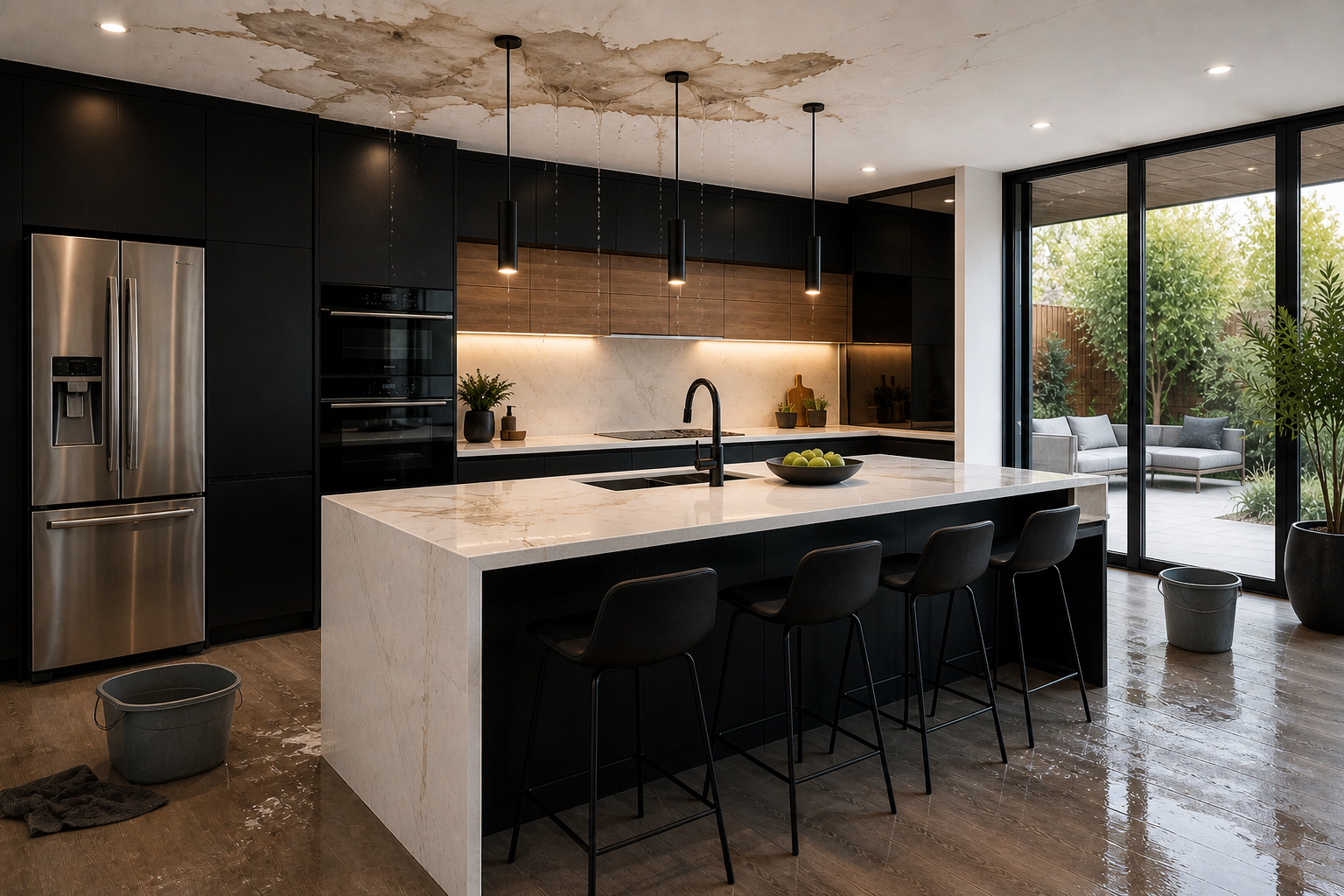
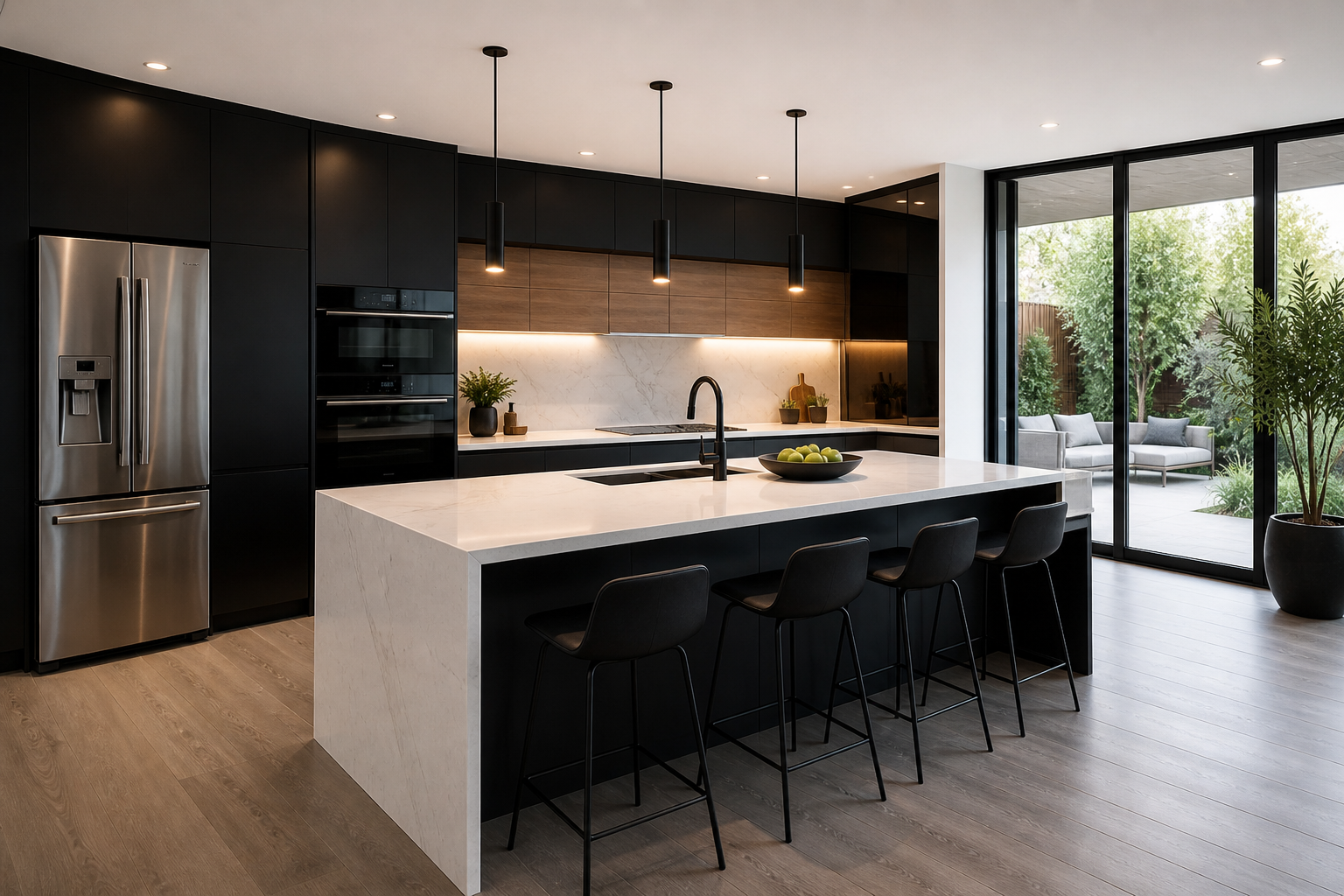
AI-generated – not an actual customer project. Shows what a result may look like.
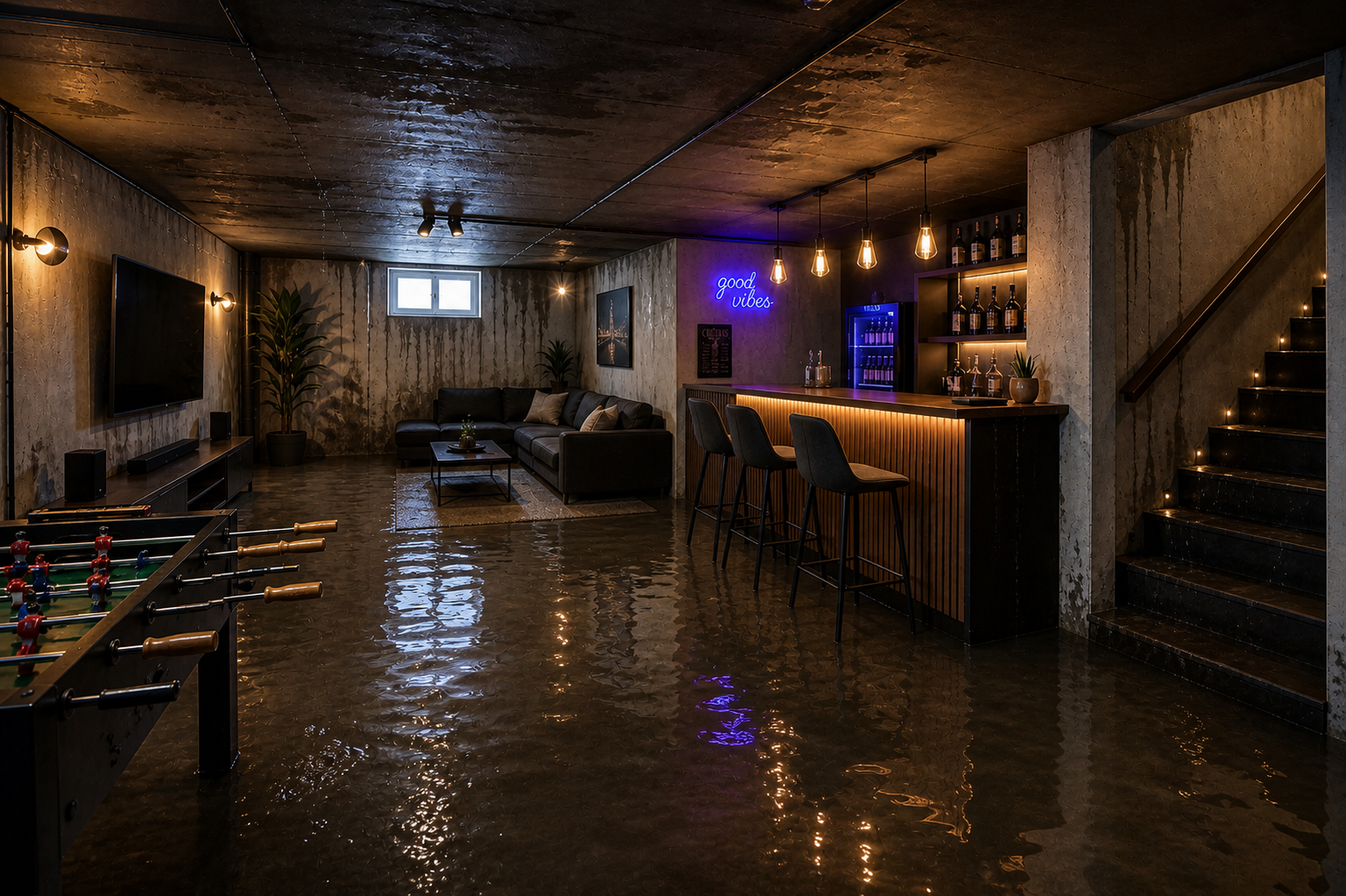

AI-generated – not an actual customer project. Shows what a result may look like.
Water damage doubles in cost every hour. Mold starts in 24. Call now — free inspection, fast response, insurance handled.